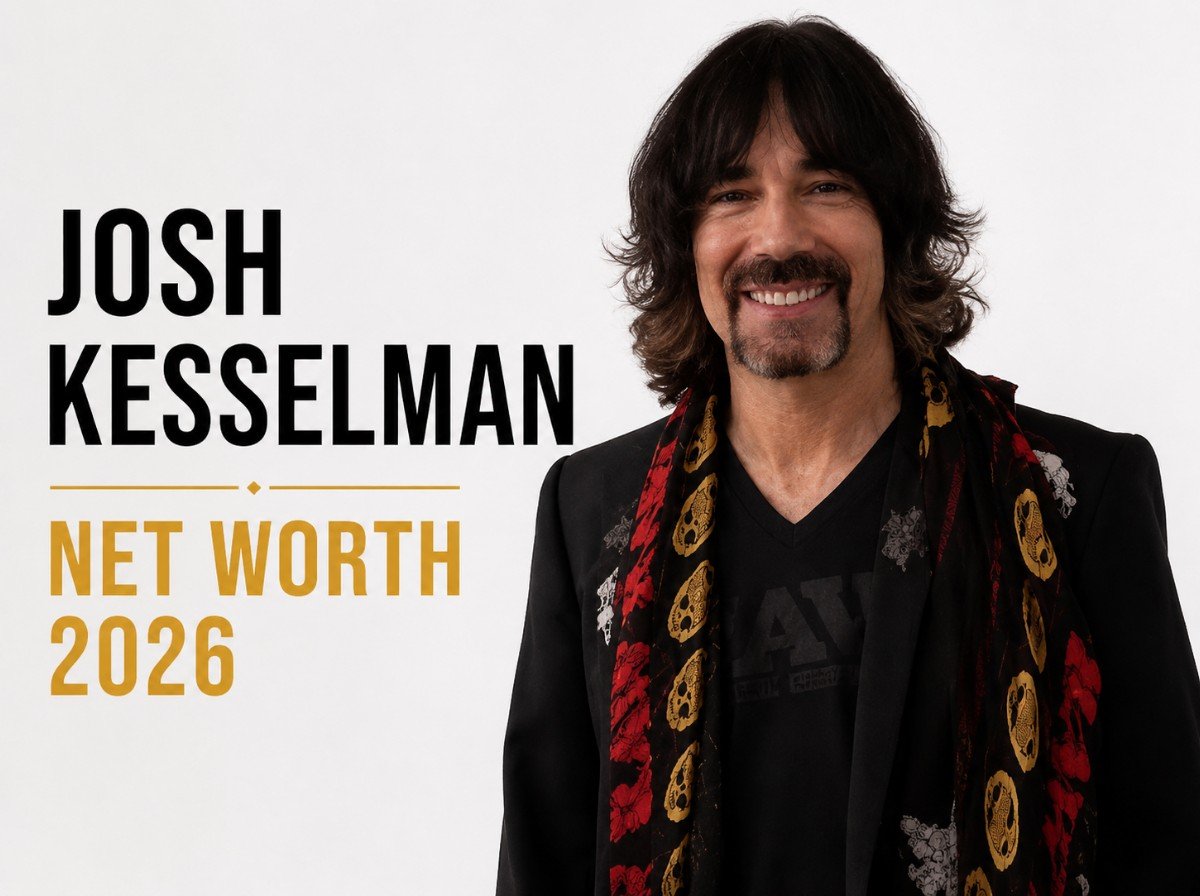
Search "Josh Kesselman net worth" and the numbers scatter all over the place — $45 million on one site, north of $150 million on another, with Forbes separately pegging the RAW brand itself at roughly $200 million. None of these are confirmed figures, because Kesselman's companies are privately held and he has never published a personal net worth. Here's what's actually documented about how he built RAW rolling papers, and why the estimates disagree so much.
Quick Facts
| Full Name | Josh Kesselman |
| Age | 47 (per contemporary profiles) |
| Profession | Entrepreneur, founder of RAW rolling papers |
| Company | Founder, HBI International (1998) |
| Known Brands | RAW, Elements, Juicy Jay's |
| RAW Launch Year | 2005 |
| Other Ventures | Co-owner, High Times magazine (2025) |
| Estimated Net Worth (unverified) | $45 million–$150 million, depending on source |
| Reported Brand Value (RAW, per Forbes) | Approximately $200 million |
| Primary Income Sources | Rolling paper and smoking-accessory sales, High Times media revenue |
Josh Kesselman Net Worth: The Short Answer
The honest starting point is that nobody outside Kesselman's accountant knows his exact net worth, and he has no obligation to disclose one since HBI International is privately held. The figures circulating online — anywhere from $45 million to $150 million — come from consumer net worth sites building estimates off assumptions about RAW's market share, retail pricing, and Kesselman's visible lifestyle, not from tax filings or audited financials.
Forbes, which covers the cannabis industry more rigorously than most outlets, has separately described RAW as a brand worth around $200 million — a figure about the company, not necessarily Kesselman's personal wealth, since HBI International also owns Elements, Juicy Jay's, and now a stake in High Times.
From a Manhattan Childhood to a Florida Smoke Shop
Kesselman grew up in Manhattan, where he has said his interest in rolling papers traces back to childhood memories of his father using rice paper. That early fascination turned into a business in the early 1990s, when Kesselman opened a smoke shop called Knuckleheads in Gainesville, Florida, according to Inc.'s profile of his career. He spent this period trading rolling papers with collectors across Europe, importing whatever unusual papers he could find, and reselling them to curious customers.
The Gainesville shop didn't last. It was forced to close after an employee sold a bong to the daughter of a high-ranking U.S. Customs Service official — an early lesson in how quickly a smoke shop's fortunes could turn under federal scrutiny.
What that first shop did give Kesselman was a genuine education in the rolling paper trade itself — which brands collectors actually valued, which manufacturing techniques produced a noticeably different smoke, and how thin the margins were for anyone just reselling other companies' products. That hands-on apprenticeship, built over years of buying and trading with European suppliers rather than through any formal business training, shaped the product philosophy he'd later apply to his own brands.
HBI International: The Company Behind the Brands
In 1998, Kesselman founded HBI International, initially focused on importing rolling papers and related supplies to sell to smoke shops around the country. Rather than staying purely an importer, he began developing his own house brands — first Elements and Juicy Jay's, and by 2005, RAW.
By the time RAW launched, Kesselman had spent years studying the manufacturing processes European paper makers had used for centuries. His pitch for RAW was straightforward: rolling papers made from unbleached plant fiber, free of the chemicals, dyes, and additives found in traditional white papers — positioned as a purer, more "natural" smoking experience.
That positioning worked. RAW grew into one of the most recognized rolling paper brands in the U.S., with HBI International eventually operating offices across the U.S., Europe, Canada, and Asia to support global distribution.
What Actually Set RAW Apart
The rolling paper market Kesselman entered in 2005 was crowded with brands that had been around for decades, most competing on price or on flavor additives. RAW's pitch ran in the opposite direction: fewer processing steps, no bleaching, no added dyes, and packaging that leaned into the "unrefined" look rather than hiding it. That aesthetic — visibly unbleached, brown paper — became almost as recognizable as the product itself, turning a commodity item into something closer to a lifestyle brand.
HBI International backed that positioning with an unusually wide product line for a rolling paper company: papers in multiple sizes and thicknesses, pre-rolled cones, rolling trays, filters, and accessories, all sold under the RAW name alongside the separate Elements and Juicy Jay's brands the company had built earlier. Distribution expanded well beyond U.S. smoke shops into general retail and international markets, which is part of why HBI needed offices spanning multiple continents rather than a single U.S. headquarters.
The Forbes Investigation: "The Pinocchio of Pot"
Not every part of the RAW story holds up to scrutiny. In February 2023, Forbes published an investigation nicknamed "The Pinocchio of Pot", drawing on a lawsuit brought by rival company Republic Technologies. The reporting found that Kesselman had told Forbes in April 2020 that a RAW factory in Alcoy, Spain was actively producing paper — but the factory didn't exist. RAW's papers were actually manufactured in France and merely packaged at the company's Spanish facility.
The lawsuit surfaced a second, stranger claim: HBI had promoted a charitable arm called the "Raw Foundation," but no nonprofit by that name was registered as a 501(c)(3) in public databases. HBI agreed to stop advertising the foundation, and the company said in a statement that its marketing "may have created the impression that we ourselves were a charity."
The legal outcome was mixed rather than one-sided. A jury found that HBI had violated the Illinois Uniform Deceptive Trade Practices Act over the factory claims, but it also sided with HBI's counterclaim that Republic Technologies had committed copyright infringement — awarding Kesselman's company $1 million in damages. It's a case worth understanding before taking any of RAW's public claims, including net worth-adjacent ones, at face value.
The episode is a useful case study in how brand storytelling and factual accuracy can drift apart even for an otherwise successful company. RAW's manufacturing story — European techniques, careful sourcing, a specific factory in a specific Spanish town — was a meaningful part of its marketing appeal to customers who cared about where and how their rolling papers were made. When that particular detail turned out to be fabricated, it didn't erase RAW's actual market success, but it did give outside observers, including anyone trying to estimate Kesselman's wealth, a concrete reason to treat company-sourced claims with some skepticism rather than repeating them uncritically.
See our verification standard for how Richlytic treats claims like this when building a profile.
Buying High Times: The 2025 Expansion
In 2025, Kesselman expanded beyond rolling papers into cannabis media. Alongside business partner Matt Stang, he purchased the High Times brand out of receivership for $3.5 million, with the stated goal of reviving the once-dominant cannabis publication. It's a notable pivot — from manufacturing a physical product to owning a media property with decades of brand recognition in the same industry RAW built its business around.
High Times had gone through receivership before the sale, meaning the brand carried real name recognition but also real financial baggage — a very different kind of acquisition than launching a product line from scratch, the way Kesselman built RAW. Reviving a legacy media brand typically means rebuilding advertiser relationships, a subscriber or readership base, and digital presence largely from the ground up, even when the name itself still carries weight in the industry. How much of that turnaround has translated into actual revenue for Kesselman and Stang isn't public information.
This kind of diversification is exactly why a single net worth number is so hard to pin down: Kesselman's holdings now span manufacturing, retail brands, and media, each with a different (and largely undisclosed) revenue picture.
RAW Giving and the Josh Kesselman Foundation
Separate from the disputed "Raw Foundation" claims uncovered by Forbes, Kesselman's philanthropic effort — branded RAW Giving — has a documented donation record. Reporting has put total giving at over $3 million, with 2024 contributions including $100,000 to the Weldon Project, $50,000 to Home Fur Good, and $100,000 to Central Arizona Shelter Services. The company has also funded water wells and hospital support in Ethiopia and partnered with Trees for the Future on a project to sponsor the planting of 500,000 trees.
More recently, this giving was formalized under the Josh Kesselman Foundation, consolidating years of ad hoc philanthropic commitments — including global water access projects and local community assistance — under a single organized structure, distinct from the earlier, improperly marketed "Raw Foundation."
The distinction matters for anyone trying to fairly evaluate Kesselman's public record: the "Raw Foundation" naming issue that surfaced in the Forbes reporting was a genuine marketing misstep, but the underlying donations — the Ethiopia water wells, the Arizona shelter funding, the tree-planting partnership — appear to be real, documented giving rather than fabricated activity. The problem Forbes identified was about how the charitable arm was labeled and registered, not whether the money moved at all.
Where the Money Actually Comes From
Stripped of the estimate-driven headline numbers, Kesselman's income sources break down into a few concrete categories. The largest is almost certainly product sales across RAW, Elements, and Juicy Jay's, sold through smoke shops, general retail, and international distributors. A smaller and newer slice comes from High Times, assuming the 2025 acquisition has started generating meaningful advertiser or subscription revenue rather than still being in a rebuilding phase. None of HBI International's brands file public earnings reports, so there's no way to weight these categories against each other with any precision — which is exactly the gap that consumer net worth sites paper over with assumptions.
How These Net Worth Estimates Actually Get Made
It helps to understand why the numbers vary this much. Consumer net worth sites don't have access to HBI International's tax filings, sales figures, or profit margins, since it's a private company with no obligation to disclose any of that. Instead, most estimates are built by guessing at RAW's retail market share and unit sales, comparing HBI's footprint to competitors with known revenue, factoring in Kesselman's visible business expansions (like the High Times purchase) as a rough signal of available capital, then rounding to a number that sounds plausible for a founder in his position.
That's not necessarily dishonest, but it's estimation stacked on estimation — not verification, and the Forbes factory episode is a direct reminder of how much of the public record around Kesselman and RAW has, at times, been shaped by the company's own marketing rather than independently confirmed facts. It's also worth noting that a "$200 million brand" figure and a "personal net worth" figure aren't the same thing, and sites that treat them interchangeably are already on shaky ground. Browse more verified net worth profiles of entrepreneurs whose wealth is similarly tied up in privately held companies.
Personal Life
Kesselman keeps a relatively industry-focused public profile, appearing mostly in cannabis trade press and interviews tied to RAW, HBI International, or his philanthropic work rather than general celebrity coverage. His public reputation is closely tied to RAW's "unbleached, natural" branding — and, since 2023, to the Forbes reporting that complicated parts of that same brand story. See our full net worth database for other entrepreneurs whose public image and documented business history don't fully line up.
That combination — a founder who built a genuinely large, globally distributed brand from a single Florida smoke shop, while also getting caught embellishing parts of that same story under legal scrutiny — is unusual enough to make Kesselman a harder subject to summarize than most net worth profiles. Readers who only encounter the "self-made rolling paper mogul" version of the story, or only the "Pinocchio of Pot" version, are getting half the picture either way. It's a similar pattern to what we found reporting on Ben Meiselas's net worth — a documented, real career alongside a wide spread of unverified public estimates.
A Quick Timeline
| Early 1990s | Opens Knuckleheads smoke shop in Gainesville, Florida |
| 1998 | Founds HBI International, importing rolling papers |
| 2005 | Launches RAW rolling papers |
| April 2020 | Tells Forbes the Alcoy, Spain factory is active; later shown not to exist |
| February 2023 | Forbes publishes "The Pinocchio of Pot" investigation |
| 2025 | Acquires High Times brand with Matt Stang for $3.5 million |
Conclusion
The RAW rolling papers story is genuinely two-sided: a real, well-documented entrepreneurial run from a small Florida smoke shop to a globally distributed brand, alongside a well-documented set of exaggerated claims that Forbes and a public lawsuit exposed in detail. Both are part of the accurate record, and treating either half alone would miss what actually happened.
What doesn't hold up is repeating any single net worth figure as settled fact. Between the wide range of estimates, the separate (and larger) brand valuation, and a company with no public financial disclosures, the honest position is that Kesselman's exact wealth simply isn't independently verifiable right now.
What is Josh Kesselman's net worth?
There's no confirmed figure. Estimates vary widely, from around $45 million on some sites to $100-150 million on others, while Forbes has described the RAW brand itself as being worth roughly $200 million. None of these numbers are independently verified, since Kesselman's companies are privately held.
How did Josh Kesselman make his money?
Primarily through HBI International, the company he founded in 1998, which owns rolling paper brands including RAW, Elements, and Juicy Jay's. He also co-owns High Times magazine, acquired in 2025.
When did Josh Kesselman start RAW rolling papers?
He launched RAW in 2005, after years of importing and selling rolling papers through HBI International, which he founded in 1998.
What was the Forbes "Pinocchio of Pot" story about?
A 2023 Forbes investigation, based on a lawsuit from rival Republic Technologies, found that Kesselman had made false claims about a RAW factory in Alcoy, Spain, that didn't exist, and had promoted a charitable foundation that wasn't registered as a nonprofit.
Did Josh Kesselman lose the Republic Technologies lawsuit?
Not entirely. A jury found HBI violated an Illinois deceptive trade practices law, but also sided with HBI's counterclaim that Republic committed copyright infringement, awarding Kesselman's company $1 million in damages.
Does Josh Kesselman own High Times magazine?
Yes. In 2025, Kesselman and business partner Matt Stang purchased the High Times brand out of receivership for $3.5 million.
How much has Josh Kesselman donated to charity?
Through RAW Giving and HBI International, Kesselman's donations have surpassed $3 million, funding causes including water wells in Ethiopia, homeless services in Arizona, and tree-planting programs.
Where did Josh Kesselman get his start in business?
He opened a smoke shop called Knuckleheads in Gainesville, Florida in the early 1990s, before founding HBI International in 1998.
Why do net worth estimates for Josh Kesselman vary so much?
Because HBI International and its brands are privately held with no public financial filings. Every estimate online is built from assumptions about revenue and market position, not verified financial records.