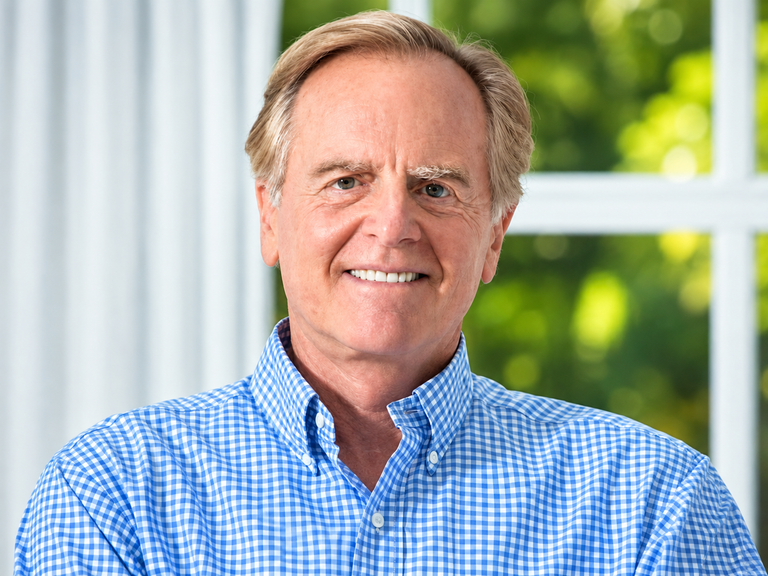
Dick Grasso’s net worth in 2026 is estimated between $100 million and $175 million, with Celebrity Net Worth placing him at $150 million. His wealth traces almost entirely to a single, extraordinary event: the $139.5 million lump-sum deferred compensation payment he received from the New York Stock Exchange in 2003, which he was ultimately allowed to keep after a five-year legal battle with the State of New York. This page works through the Dick Grasso net worth question using court records and contemporaneous reporting rather than recycled figures.
So here’s the honest version. Grasso has never disclosed his personal finances, and the estimates circulating online vary enormously — some sites put him as low as $50 million to $80 million, one of them a hijacked university subdomain that even misspells his name. Those low figures appear to take his gross payout, subtract tax, and stop there, ignoring twenty-three years of investment returns. The range here reflects both the tax reality and the compounding that follows it. That pattern — a single unsourced number copied across dozens of sites until it looks authoritative — is the same one that inflated the figures around entrepreneur Marquett Davon Burton, only running in the opposite direction.
On this page10 sections
Dick Grasso Net Worth 2026: Quick Facts
| Detail | Information |
|---|---|
| Estimated Net Worth (2026) | $100 million – $175 million |
| Most-Cited Figure | $150 million (Celebrity Net Worth) |
| Primary Source of Wealth | NYSE deferred compensation and retirement package |
| Full Name | Richard A. “Dick” Grasso |
| Born | July 26, 1946, Jackson Heights, Queens, New York |
| Age in 2026 | 80 |
| Nationality | American |
| Education | Newtown High School; two years at Pace University; U.S. Army |
| NYSE Career | Floor clerk 1968 → Chairman and CEO 1995–2003 |
| Defining Event | $139.5 million lump sum, 2003; resigned 17 September 2003 |
| Legal Outcome | All state claims dismissed, 1 July 2008 |
Note: Dick Grasso has not publicly disclosed his personal finances. The figures here are estimates built from documented court filings and contemporaneous reporting, not confirmed totals.
Who Is Dick Grasso?
Richard A. Grasso was born on 26 July 1946 in Jackson Heights, Queens, and raised by his mother and two aunts after his father left during his infancy. He graduated from Newtown High School, attended Pace University for two years, and then enlisted in the U.S. Army.
Two weeks after leaving military service in 1968, he took a job at the New York Stock Exchange as a floor clerk — the bottom rung of the institution. He would spend the next thirty-five years climbing it, becoming president and then, in 1995, chairman and chief executive officer.
His public profile peaked twice. First for reopening the exchange on 17 September 2001, six days after the September 11 attacks, an act widely credited as a moment of national resolve. Second, two years later, for the pay package that ended his career.
How Did Dick Grasso Build His Wealth?
His financial history is unusually simple to trace, because almost all of it sits in court documents.
The climb (1968–1995). Twenty-seven years of rising NYSE salaries, from floor clerk to president. Substantial by ordinary standards, but not the source of his fortune.
The CEO years and the SERP (1995–2002). The wealth was created inside the NYSE’s Supplemental Executive Retirement Plan. Court filings in People v. Grasso record the scale of its growth: the SERP was valued at roughly $29.9 million in 1999 and had grown to over $110 million by 2002. A further $29,928,062 was transferred to a supplemental savings plan in 1999, following a $6,571,397 advance in 1995.
The payout (2003). On 3 September 2003, Grasso received $87,911,894 from his savings plan account — a distribution the court would later find violated the plan’s restrictions. In total the exchange paid him an immediate lump sum of $139.5 million.
The waiver. Under pressure from SEC chairman William H. Donaldson, Grasso publicly agreed to forgo a further $48 million in future payments. The $139.5 million plus that $48 million is where the widely quoted $187.5 million total package figure comes from.
Post-NYSE (2003–present). He founded Gladiator Holdings Inc. and has served on boards including the National Italian American Foundation and the Yale School of Management advisory board, alongside paid speaking engagements.
Dick Grasso’s Income Sources
Deferred compensation and retirement benefits. Overwhelmingly the dominant source. The $139.5 million lump sum is not merely the largest item on his balance sheet — it is, in practical terms, the whole story. This is unusual: for most corporate leaders, disclosed pay is only a fraction of total wealth, which is exactly the problem with stock-tracker estimates of executives like former WeWork CEO David Tolley. Grasso is the rare case where the disclosed figure genuinely is the fortune.
NYSE salary and bonuses (1968–2003). Thirty-five years of rising compensation at one institution, culminating in eight years as chairman and CEO of the world’s most prominent exchange.
Investment returns. The most underweighted factor in every published estimate. Whatever remained after tax has had more than two decades to compound, which is precisely why the low-end figures circulating online do not hold up.
Board seats and business interests. Gladiator Holdings and various board positions. No compensation figures for these have been publicly disclosed, and they are minor relative to the 2003 payout.
Speaking engagements. Grasso is listed with speaker bureaus and has appeared at university and industry events. A steady but comparatively small income line.
Dick Grasso Earnings 2026: What He’s Actually Making Now
At 80, Grasso is long past the earning phase of his career. His current income is best understood as the return on capital rather than compensation for work.
Whatever portion of the 2003 payout survived taxation and legal costs has been invested for twenty-three years. On a conservatively managed portfolio, investment income alone would comfortably exceed what most people earn in a career — without him doing anything at all.
Alongside that sit occasional speaking fees, board-related compensation, and whatever Gladiator Holdings generates. None of these are material next to the underlying capital base.
The $187.5 Million Question: What He Actually Kept
This is where nearly every published estimate goes wrong, in one of two opposite directions.
Start with the gross. He received $139.5 million in 2003 and waived $48 million more, for a headline package of $187.5 million. He never received that additional $48 million — he was out before it was paid.
Subtract tax. A lump sum of that size, paid to a New York City resident in 2003, faced federal income tax at the top marginal rate plus New York State and New York City income taxes. Combined, that is broadly in the 45–48% range. On $139.5 million, that leaves roughly $73 million to $77 million net.
Subtract the legal war. Eliot Spitzer sued on 24 May 2004. In October 2006 the trial court ordered Grasso to return approximately $100 million — around $58 million in improperly distributed savings-plan funds, plus the $6.5 million advance and the $29.9 million transfer, with interest. That ruling was fought all the way up. Four years of top-tier New York litigation against the State Attorney General is a multimillion-dollar expense in its own right.
Then add twenty-three years. On 1 July 2008, New York’s Court of Appeals dismissed all remaining claims. The reasoning was procedural rather than exculpatory: once the NYSE converted from a not-for-profit to a for-profit entity, the State no longer had standing to pursue the case. Grasso kept the money.
That is the step the low estimates omit. A figure of $50–80 million describes roughly what he had in 2008. It is not a 2026 number. Capital of that size, invested conservatively over eighteen further years, does not stay still.
Assets and Lifestyle
Very little is documented, and Grasso has kept it that way.
No property purchases, vehicle collections or specific investment holdings tied to him appear in credible reporting. Gladiator Holdings is privately held with no published financials — the same visibility problem that makes figures for privately held operators like designer and developer Elaine Culotti so unreliable. He has maintained a notably low public profile since 2008 — a deliberate contrast with the visibility that made his pay package a national story.
The one publicly visible strand of his post-NYSE life is institutional rather than material: board service with the National Italian American Foundation and the Yale School of Management advisory board.
Dick Grasso Net Worth: Breaking Down the Estimate
| Factor | What It Means for the Estimate |
|---|---|
| No personal disclosure | Grasso has never released financial details; every published figure is modelled. |
| Unusually well-documented source | Unlike most subjects, the origin of his wealth sits in public court filings with exact figures. |
| Gross is not net | The $139.5 million payment faced combined federal, state and city tax of roughly 45–48%. |
| The $48 million was never paid | He waived it under SEC pressure before receiving it, so it never entered his balance sheet. |
| Five years of litigation costs | Defending against the State Attorney General from 2004 to 2008 was a significant expense. |
| Low estimates ignore compounding | Figures of $50–80 million approximate his 2008 position, not his 2026 one. |
| The win was procedural | The 2008 dismissal turned on the NYSE’s conversion to for-profit status removing state standing — not on a finding that the pay was proper. |
| Post-2008 income is minor | Board seats and speaking fees are small relative to the invested capital base. |
The realistic takeaway: Dick Grasso’s fortune is one of the most precisely documented in American corporate history at its point of origin, and one of the least documented ever since. What he received is a matter of public record. What he has done with it for twenty-three years is not.
Why People Search for Dick Grasso’s Net Worth
The search interest has never really faded, because the 2003 pay package became shorthand for corporate excess in the pre-financial-crisis era. Grasso was the head of the institution that regulated many of the companies whose executives sat on the committee that approved his pay — a conflict that needed no explaining to the public, and one that became the subject of sustained academic study, including a Vanderbilt Law Review analysis of executive compensation at public nonprofit corporations built around his case.
People also search because the ending was so unusual. He was forced out, publicly humiliated, sued by the most aggressive attorney general in the country, ordered by a court to return roughly $100 million — and then kept all of it on a technicality. That outcome invites the obvious follow-up question: how much is he worth now?
Frequently Asked Questions
What is Dick Grasso’s net worth in 2026?
Estimates range from $100 million to $175 million, with Celebrity Net Worth citing $150 million. He has never disclosed a figure.
How much was Dick Grasso’s NYSE pay package?
He received an immediate lump sum of $139.5 million in 2003 and waived a further $48 million, giving a headline package of $187.5 million.
Did Dick Grasso have to give the money back?
No. A trial court ordered him to return roughly $100 million in October 2006, but New York’s Court of Appeals dismissed all claims on 1 July 2008.
Why were the claims against Dick Grasso dismissed?
On procedural grounds. Once the NYSE converted from a not-for-profit to a for-profit entity, New York State no longer had standing to pursue the case.
Who sued Dick Grasso?
New York Attorney General Eliot Spitzer filed suit on 24 May 2004, seeking repayment of most of the compensation package.
Why did Dick Grasso resign?
The NYSE board voted 13-7 to request his resignation on 17 September 2003, after public and regulatory backlash over the pay package, including pressure from SEC chairman William H. Donaldson.
How long did Dick Grasso work at the NYSE?
Thirty-five years. He joined as a floor clerk in 1968 and served as chairman and CEO from 1995 until 2003.
What did Dick Grasso do after leaving the NYSE?
He founded Gladiator Holdings Inc. and has served on boards including the National Italian American Foundation and the Yale School of Management advisory board, alongside paid speaking engagements.
How old is Dick Grasso?
He was born on 26 July 1946, making him 80 years old in 2026.
Is Dick Grasso a billionaire?
No. Nothing in the public record supports billionaire status; the credible estimates sit in the low hundreds of millions at most.
Why do net worth estimates for Dick Grasso vary so much?
Because different sites use different starting points – the $187.5 million package, the $139.5 million payment, or the post-tax figure – and most ignore two decades of investment returns entirely.
Must Read Our Terms & Conditions.