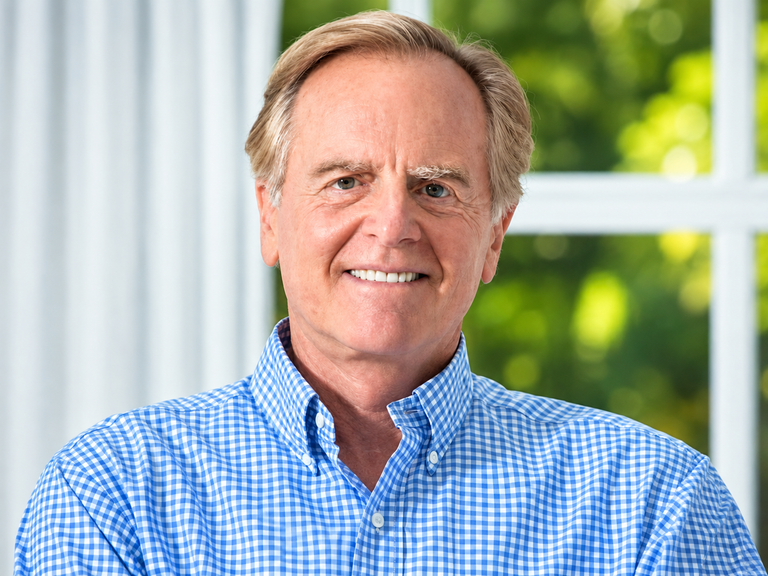
David Tolley’s net worth in 2026 is realistically estimated between $30 million and $80 million — dramatically higher than the $1.46 million to $2 million figure produced by stock-tracking databases. That lower number is not wrong exactly; it is measuring something entirely different from net worth. Tolley spent eleven years as a senior managing director in private equity at Blackstone, a decade in investment banking at Morgan Stanley, and has since served as CFO of two satellite companies and CEO of WeWork through one of the most-watched corporate restructurings in recent memory.
On this page10 sections
- 01Quick Facts
- 02Who Is David Tolley?
- 03How Did David Tolley Build His Wealth?
- 04David Tolley’s Income Sources
- 05David Tolley Earnings 2026
- 06Assets and Lifestyle
- 07The Filing That Disproves the $1.46 Million Figure
- 08Breaking Down the Estimate
- 09Why People Search for David Tolley’s Net Worth
- 10Frequently Asked Questions
David Tolley Net Worth 2026: Quick Facts
| Detail | Information |
|---|---|
| Estimated Net Worth (2026) | $30 million – $80 million |
| Stock-Tracker Figure | $1.46 million – $2 million (tracked insider holdings only) |
| Primary Source of Wealth | Private equity, investment banking, C-suite compensation, board fees |
| Full Name | David Tolley |
| Education | MBA, Columbia Business School; BA Economics and History, University of Michigan |
| Career Span | Morgan Stanley 1990–2000; Blackstone 2000–2011 |
| Best Known For | CEO of WeWork, May 2023 – June 2024 |
| Current Role | Chairman of the Board, KVH Industries (since July 2023) |
| Board Experience | Approximately 14 public and private company boards |
| Status | Active — board chairman and director roles |
Who Is David Tolley?
David Tolley is a finance executive whose career spans investment banking, private equity and operational leadership — a combination that is rarer, and considerably more lucrative, than any one of those paths alone.
He holds an MBA from Columbia Business School and a Bachelor of Arts in Economics and History from the University of Michigan. He is best known publicly as the man who ran WeWork during its Chapter 11 restructuring, but that role represents roughly one year at the end of a thirty-five-year career.
How Did David Tolley Build His Wealth?
His wealth accumulated across four distinct and cumulative phases.
Morgan Stanley (1990–2000). Tolley spent a decade in Morgan Stanley’s investment banking division, focused on communications sector clients. Ten years in investment banking through the 1990s telecom boom, rising to vice president, would have produced strong seven-figure cumulative compensation — and, critically, the capital and credibility to move into private equity.
Blackstone (2000–2011). This is where the real money was made, and it is the single most important fact about his finances. Tolley spent eleven years at Blackstone as a senior managing director in private equity, per his official KVH Industries board biography.
Senior managing directors in private equity are compensated through salary, bonus and — decisively — carried interest, a share of the profits on funds they help deploy. Over an eleven-year run at the world’s largest alternative asset manager, spanning Blackstone’s 2007 IPO and the buyout boom that preceded it, carried interest is where partner-level wealth is created. None of this appears in any insider stock filing.
The CFO years (2012–2022). Tolley served as Chief Financial Officer of OneWeb and then Chief Financial Officer of Intelsat S.A. from 2019 to 2022. Public-company CFO compensation at that scale typically runs well into seven figures annually, combining salary, bonus and equity.
WeWork and board work (2023–present). He joined WeWork’s board in February 2023, became interim CEO in May 2023, was made permanent CEO in October 2023, and led the company through Chapter 11 and out the other side before departing in June 2024. He became Chairman of KVH Industries in July 2023 and sits on the board of DigitalBridge Group.
David Tolley’s Income Sources
Private equity carried interest. The largest and least visible component. Carried interest at a firm of Blackstone’s scale, accrued over eleven years at senior managing director level, is the reason a stock-tracker figure of $1.46 million bears no relationship to his actual position.
Executive compensation. Salary, bonus and equity across CFO roles at OneWeb and Intelsat, and the CEO role at WeWork. Concrete figures exist for the last of these — see below.
Board and chairmanship fees. Tolley has served on roughly fourteen public and private company boards. Public-company directorships typically pay $150,000 to $400,000 annually in combined cash and equity, and a board chairmanship pays a premium. Across multiple simultaneous seats over many years, this is a substantial recurring income line in its own right.
Equity holdings. The portion the databases actually see: shares in DigitalBridge Group, KVH Industries and previously Cumulus Media, disclosed through periodic Form 4 filings and fluctuating with share prices.
David Tolley Earnings 2026: What He’s Actually Making Now
Since leaving WeWork in June 2024, Tolley’s documented activity is board-level rather than operational: Chairman of the Board at KVH Industries, where he also chairs the compensation committee and serves on the audit and nominating committees, plus a directorship at DigitalBridge Group.
That is a portfolio-career structure common to senior executives at this stage: several hundred thousand dollars per seat annually in cash and equity, with far lower time demands than a CEO role and no operational risk. It is income designed to preserve wealth rather than build it — the accumulation phase of his career was completed at Blackstone more than a decade ago.
Assets and Lifestyle
Almost nothing is publicly documented, and that is entirely normal for this profile.
Private equity executives and public-company directors are not celebrities. There are no reported property purchases, vehicle collections or lifestyle disclosures attached to Tolley’s name in any credible source, and he maintains no significant public-facing personal presence. The only assets visible anywhere are the share positions he is legally required to disclose through Form 4 filings at KVH Industries, DigitalBridge Group and previously Cumulus Media.
This absence is itself informative. Finance executives at his level typically hold wealth in diversified investment accounts, private fund interests, trusts and real estate — none of which generate public records. Anyone building a net worth estimate from what is visible will systematically understate the position, because the visible portion is precisely the part regulation forces into daylight, not the part where the money actually sits.
The Filing That Disproves the $1.46 Million Figure
This is the detail that settles the question, and it is sitting in public on the SEC’s own website.
WeWork’s employment agreement for Tolley as interim CEO, filed with the SEC in 2023, sets out his terms in plain language:
- Base salary at an annualised rate of $2,750,000
- $1.5 million in target discretionary bonuses, split into two $750,000 tranches
- $500,000 in restricted stock units, cliff-vesting at term expiration
- Severance provisions including remaining base salary and full RSU acceleration
The initial term ran from 26 May 2023 to 26 November 2023 — six months. On those terms, that single half-year engagement was contracted to pay him roughly $3.4 million.
In other words, David Tolley was set to earn more in six months at WeWork than his entire supposed “net worth” according to the stock-tracking databases. He then continued as permanent CEO for a further seven months on top of that.
That one document demonstrates why insider-holdings figures should never be presented as net worth. They are a snapshot of registered share positions, not a measure of accumulated wealth.
David Tolley Net Worth: Breaking Down the Estimate
| Factor | What It Means for the Estimate |
|---|---|
| Stock trackers measure holdings, not wealth | Benzinga and MarketScreener report Form 4 insider positions, which exclude cash, private assets and past compensation entirely. |
| Carried interest is invisible | Eleven years as a Blackstone PE senior managing director generated wealth that appears in no public filing. |
| Documented CEO pay contradicts the low figure | His WeWork agreement alone set base salary at $2.75 million annualised plus $1.5 million in bonuses. |
| Thirty-five-year earnings runway | Morgan Stanley from 1990 and Blackstone from 2000 means three and a half decades of high-end finance compensation. |
| Board income compounds | Roughly fourteen board seats over a career, each typically paying six figures annually. |
| WeWork equity was near-worthless | Shares in a company entering Chapter 11 contributed little regardless of grant value. |
| No public asset disclosure | No property, private investment or trust holdings have been reported, so the upper bound is genuinely uncertain. |
| One seed source is a different person | A GuruFocus profile circulated as his refers to “David M. Tully,” a different individual — a caution about aggregator data generally. |
The realistic takeaway: David Tolley is a career finance executive whose wealth was built quietly in private equity rather than publicly at WeWork. The databases reporting $1.46 million are accurately measuring his tracked public share positions — and telling you almost nothing about his net worth.
Why People Search for David Tolley’s Net Worth
WeWork’s collapse was one of the most widely covered corporate stories of the decade, and Tolley became its public face at the point of maximum attention. People searching for his net worth are usually trying to answer a related question: what does it pay to run a company through bankruptcy, and did the person who cleaned up do as well as the person who caused the mess?
The answer — a well-compensated executive who earned a few million for the job, versus a founder who left with a settlement approaching $700 million — is more interesting than either individual number.
Frequently Asked Questions
What is David Tolley’s net worth in 2026?
We estimate $30 million to $80 million, modelled from his documented career. He has never disclosed a figure.
Why do stock trackers say David Tolley is worth only $1.46 million?
Those databases track SEC Form 4 insider filings – shares held in specific public companies. They exclude cash compensation, private equity earnings, retirement accounts and every non-public asset.
How much was David Tolley paid at WeWork?
His filed employment agreement as interim CEO set base salary at an annualised $2,750,000, plus $1.5 million in target discretionary bonuses and $500,000 in RSUs, for an initial six-month term.
How long was David Tolley CEO of WeWork?
From May 2023, initially as interim CEO, becoming permanent CEO in October 2023, until June 2024 – leading the company through Chapter 11 and its emergence.
Where did David Tolley work before WeWork?
He was CFO of Intelsat S.A. (2019-2022) and CFO of OneWeb, following eleven years at Blackstone and a decade at Morgan Stanley.
What did David Tolley do at Blackstone?
He was a senior managing director in private equity from 2000 to 2011 – the phase of his career where partner-level wealth is typically created through carried interest.
Is David Tolley still working?
Yes. He is Chairman of the Board at KVH Industries, chairs its compensation committee, and serves on the board of DigitalBridge Group.
What is David Tolley’s education?
An MBA from Columbia Business School and a BA in Economics and History from the University of Michigan.
How many boards has David Tolley served on?
Approximately fourteen public and private company boards over his career.
Did David Tolley make more than Adam Neumann at WeWork?
Not remotely. Neumann’s reported exit settlement was around $700 million; Tolley’s compensation ran to a few million dollars.
Is David Tolley on the Cumulus Media board?
His KVH biography lists Cumulus Media among historical rather than current board positions.
Must Read Our Terms & Conditions.